Friday, January 11, 2008 at 9:30 pm
Welcome to Kuwait
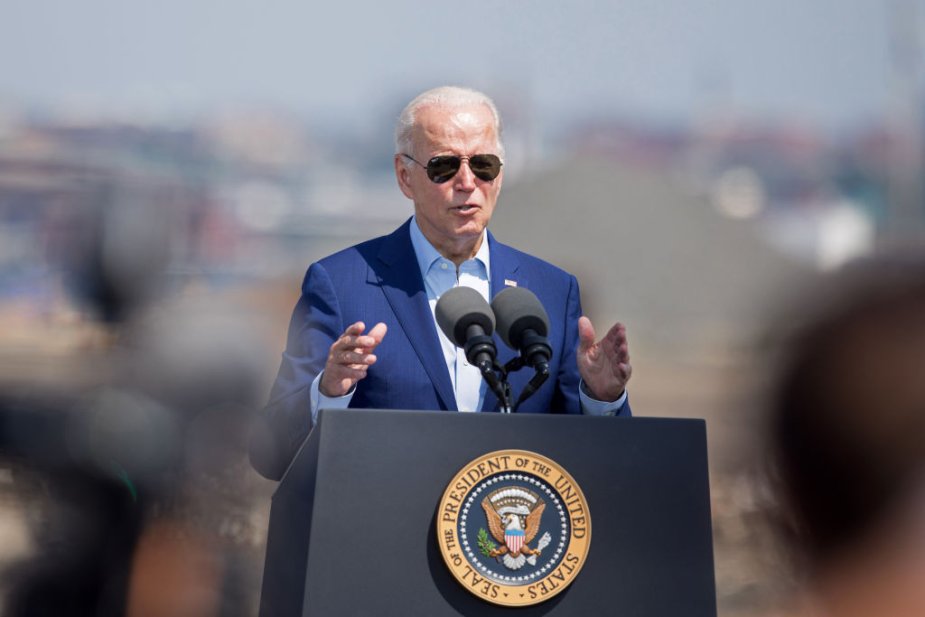
It was probably a slip of the tongue by President Bush, who continued his Middle East tour by arriving in Kuwait today. During a roundtable interview with Arab journalists before leaving Washington, he made a curious statement while he was lauding political reforms by pro-U.S. rulers in the conservative Gulf countries. "You know," he said, "women are now very active in the Kuwaiti parliament." Well, no woman has ever been elected to the Kuwaiti parliament.
The story says a lot about America and the Middle East. What Bush may have been thinking about is the fact that Kuwait has indeed been taking gradual steps to grant women more basic rights, including the right to vote. Kuwait has long been regarded as the most liberal Arab country in the Gulf, with an elected parliament dating back to 1963. (Saudi Arabia still lacks one.) In 1999, amid a campaign by courageous Kuwaiti women activists, Kuwait's ruler tried to decree women's suffrage, but parliament blocked him. In 2005, parliament finally passed legislation giving women the right to vote, and in 2006, women voted and became candidates in elections for parliament. Twenty-seven women were among the 249 candidates competing for 50 seats, yet none of them won, though the balloting was considered free and fair. By virtue of being a cabinet member, one woman, Education Minister Nuriya al-Sabeeh, is currently permitted to vote on legislation, but is not an MP as such.
Bush's apparition of seeing Kuwaiti women politicians debating bills in the national assembly (without abayas and headscarves?) perhaps reveals his American impatience to transform the Middle East into our idea of what it should look like and to do so on our speedy timetable. Similarly, when Bush invaded Iraq five years ago, he seemed to have become convinced that Iraqis would welcome Americans with flowers and sweets, quickly organize themselves into a proper democracy and become a beacon of freedom for Arabs everywhere. As the experience of Kuwaiti women indicates, however, change will come slowly due to the powerful conservative influences in the region of religion, tradition and entrenched autocracy.
How America behaves in the Middle East can and does have a tremendous effect on attitudes and change, for better or worse. Bush should be inspiring Arabs and making Americans proud with his advocacy of liberty in the Middle East, including his administration's active promotion of women's rights. But because Arabs are generally disgusted by his administration's long neglect of the Palestinian problem and the nightmare in Iraq, Bush has helped give American-backed reform a bad name in this part of the world. Many Arab women who privately appreciate Bush's support for their cause still do not want to be associated with the U.S. in any way, lest their sincere efforts to build more open societies be seen as colluding with Yankee imperialism. In any case, as Kuwaiti women proved during their long struggle for freedom, they don't need America or Bush to show them the way.
Unfortunately, Bush's policies have been giving ammunition to the Islamists and conservative political forces engaged in a cultural struggle with Arab secularists, liberals and democrats-- the most pro-Western elements of their society. You'd think that Kuwait's 1 million people should be pretty solidly pro-American, and indeed pro-Bush. In 1990, Saddam Hussein invaded the country he called an Iraqi province, and Bush's father, Bush 41, assembled an international war coalition that promptly ejected Iraqi forces and restored the al-Sabah ruling family to power. But while Kuwaitis tend to be well disposed to the U.S. compared with people in most other Arab countries, their sympathy isn't as strong as you'd expect.
In a Pew poll in 2007, in fact, 26% of Kuwaitis identified the U.S. as the country posing the biggest threat to Kuwait, behind Iran and Iraq; and 63% worried that it could become a military threat. (Fifty-four percent of Kuwaitis--perhaps the older generation?--still viewed the U.S. as their closest ally.) In the same poll, 28% considered suicide bombings justified at least in some cases--low among Arab countries, but still sizable. Thirteen percent of Kuwaitis expressed confidence in Osama bin Laden, whose spokesman is himself a Kuwaiti Islamist. Forty-nine percent of Kuwaitis had a favorable view of Hizballah and 41% of Hamas--militant groups the U.S. labels as terrorists. One of the questions Bush fielded from the Arab journalists was whether the U.S. would release four Kuwaitis being detained as terrorists at Guantanamo. Young Kuwaiti men have been captured trying to enter Iraq to wage jihad against U.S. forces there. Islamists have been gaining politically in Kuwait, gaining 34% of the seats in parliament. Government security forces have fought gun battles with Islamic extremists allegedly planning attacks inside the state.
This is Bush's first visit to the country whose liberation in 1991 was led by his own father and namesake. He is thanking Kuwaitis for their assistance in overthrowing Saddam--the Kuwaiti government was the one Arab regime that did not publicly object to the 2003 invasion. But Bush's main reason for stopping by is to win Kuwait's support for isolating Iran. Even in the country that has so benefitted from U.S. military involvement in the Gulf, there is grave concern about Bush's intentions regarding the Islamic Republic next door. Kuwaiti leaders have repeatedly said they would not allow their country to be used as staging base for a U.S. strike on Iran's nuclear program. AFP cites a front-page editorial in today's Kuwaiti Al-Rai newspaper saying, "Mr President, the region needs smart initiatives not smart bombs." Just in case Bush gets confused, as he did about women in parliament, Kuwait's foreign minister has a trip of his own planned for next week. His destination: Tehran.
--By Scott MacLeod/Cairo
About The Middle East Blog
RSS Feed
Daily Email
The Middle East Blog - TIME.com Archives
More TIME Blogs
Top Stories
- States Financial Outlook: Getting Worse Fast
- Big Three Bailout Hits Some Speed Bumps in Washington
- Heeding No Authority, Israeli Settler Youth Rampage in Hebron
- Laugh and the World Laughs With You: How Happiness Spreads
- Robert Gates: Secretary of Hilarity!
- A Pirate Ransom Deal: Who Gets the Money?
- Lara Croft Is Back and Remarkably Well-Preserved
- Oil-Price Drop Forces Big Energy to Retreat
- Even Google Gets Frugal in the Recession
- After Mumbai, Can the US Cool India-Pakistan Tension?

Leave a Reply
You must be logged in to post a comment.